Luxury Outdoor Furniture in Thailand: A Guide for Hotels, Resorts, and Pool Villas
Pareena Decor · 9 September 2026 · Design & procurement
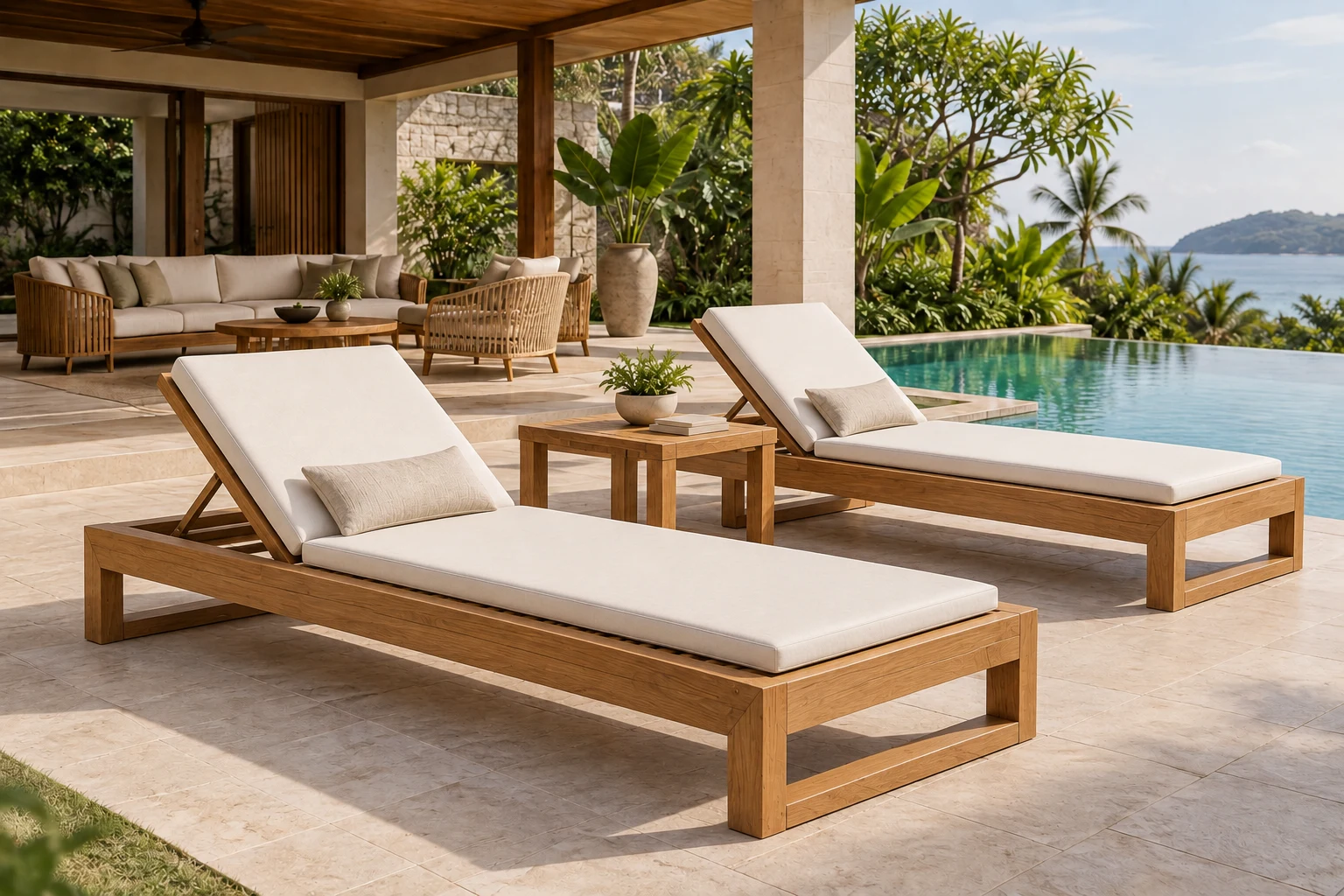
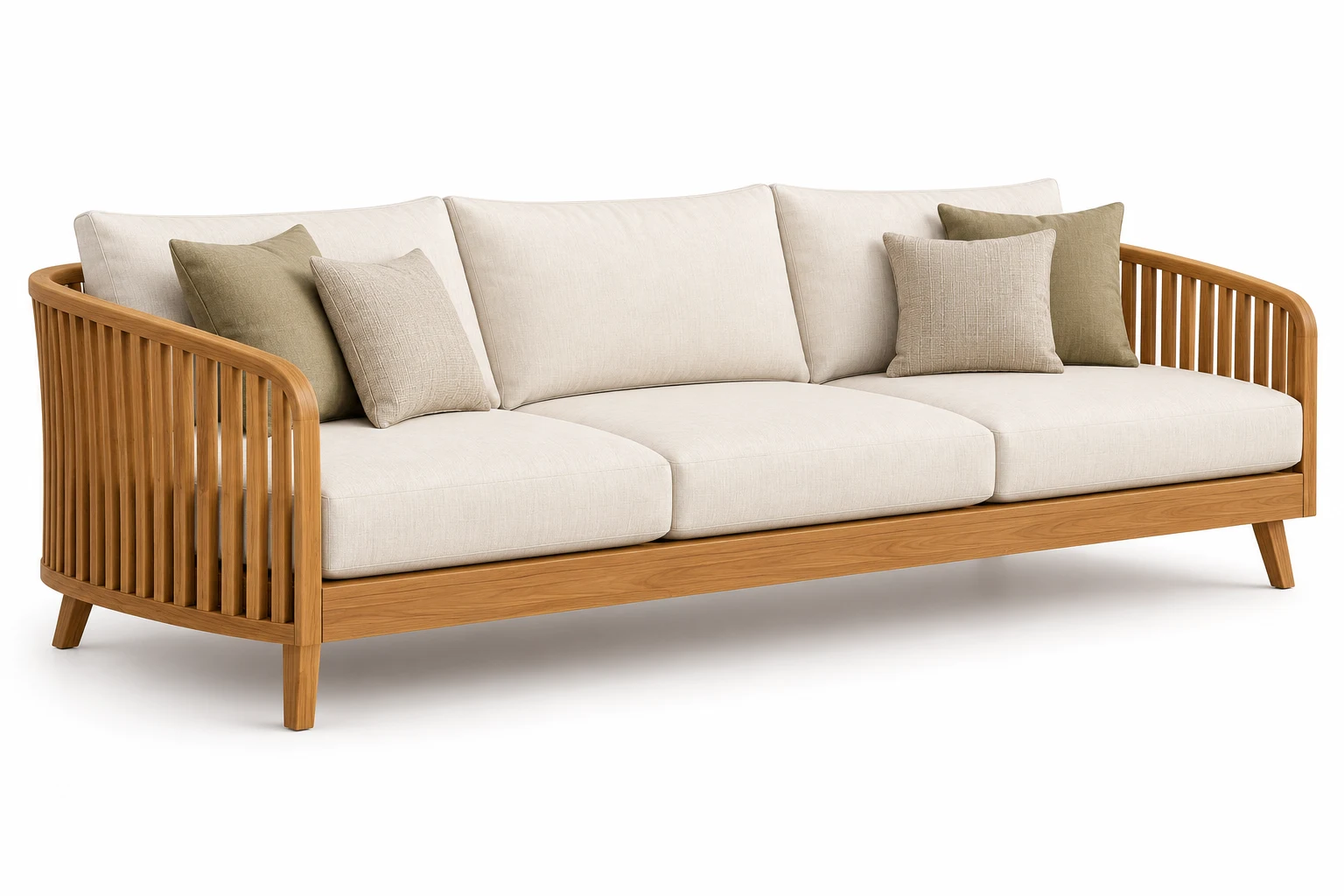
For hotels, resorts, and pool villas in Thailand, outdoor furniture should match the space’s exposure, guest activities, and maintenance plan. Start by separating covered terraces from fully exposed pool decks, then compare the exact timber, weave, structural frame, and cushion specification proposed for each location. Teak furniture brings visible natural grain to a design, while appropriately specified synthetic woven panels add texture; neither material name alone proves that a complete product suits your site. Before ordering, approve a full-size sample and confirm delivery, care instructions, and replacement support. That process helps turn an attractive design into a practical part of the guest experience. Picture a quiet villa morning: coffee within easy reach, a comfortable seat, and furniture that belongs naturally with the timber, stone, and planting around it. The decisions behind that scene affect housekeeping and purchasing just as much as the opening photographs. This guide explains how to select and specify outdoor furniture, with particular attention to coastal projects in Phuket, Koh Samui, Krabi, and Koh Phangan. It also presents new Pareena Decor design concepts through realistic illustrations, including straight-platform teak sunbeds, a standalone sofa, and coordinated lounge and dining ideas. These images communicate design intent; final materials, dimensions, comfort, and construction should be confirmed through sample development. Use the guide to prepare a clearer brief for your designer or furniture supplier.
Start with the Guest Experience
Before you decide whether your terrace needs a curved sofa or a row of teak loungers, ask what you want guests to do there. Is this where couples read quietly, families gather after swimming, or friends enjoy drinks before dinner? Each activity suggests a different relationship between seat height, back support, table placement, privacy, and available shade. A lounge chair that feels wonderfully relaxed for an afternoon conversation may be awkward for someone trying to eat breakfast from a low coffee table. Equally, a dining chair can look elegant beside a pool while offering very little reason to sit there for an hour. Think of the furniture plan as a host preparing the room before visitors arrive: it should anticipate needs without making guests think about them. Place a practical surface close to seating, check whether armrests help people stand, and give guests a choice between sitting upright and reclining where the layout allows. Invite your operations team to comment before the design is finalized, because they often notice issues that photographs hide. Can a server reach the table comfortably, and can someone carry a tray through the space without squeezing between chairs? Hotel outdoor furniture earns its place when appearance and everyday use support each other, creating a setting that feels welcoming from the first moment to the last.
Map Your Outdoor Spaces Before Choosing Products
A useful furniture plan begins with the site, including the parts you might otherwise overlook: door swings, drainage points, pool equipment access, uneven paving, and the route from the delivery vehicle to the terrace. Mark where direct rain reaches the furniture and where an overhang provides genuine protection, because two chairs only a few metres apart may face quite different conditions. Designer Alinta Lim describes the sheltered category as “products that will be outside but undercover,” a helpful distinction when discussing furniture exposure with suppliers. KING’s outdoor furniture design guide explains this separation between covered and exposed settings. For your project, translate that distinction into a simple location schedule so every product has an intended position and an agreed exposure requirement. Then test the arrangement at full scale using temporary markers or sample furniture, allowing for someone to pull out a chair, recline a sunbed, and walk past another guest. Avoid treating the largest possible seating count as the best result, especially when privacy is part of the property’s appeal. A slightly smaller collection can create a more generous experience if the circulation feels natural and the view remains open. Photograph the marked layout from the guest room and the pool approach before placing the order, so you can assess both the practical movement and the visual balance of the entire outdoor area.
Choose Materials for the Actual Location
When comparing resort furniture in Thailand, a material name should begin the conversation, not finish it. Words such as teak, rattan, outdoor fabric, and coated metal describe broad categories, while the final result depends on the precise product, its construction, and its intended use. Ask suppliers to identify what is visible, what carries the load, what protects the surfaces, and what maintenance the finished piece requires. A woven chair, for example, might combine several different materials, each with its own care instructions and exposure limitations. Your purchasing documents should make those differences clear enough that two competing quotations can be compared without guessing. It also helps to separate aesthetic preferences from performance requirements: a warm timber colour is a visual choice, while suitability for a fully exposed terrace needs supporting product information. Do not assume that the furniture in a coastal photograph has been tested for your coastal location, or that one attractive sample represents every available specification. Request the exact finish sample, upholstery reference, and construction details that will apply to the order you are considering. The table below is a purchasing framework rather than a universal ranking of materials; it shows where to focus your questions. A strong decision combines the look you want with a specification the supplier can explain clearly and support in writing.
| Furniture option | Design contribution | Confirm before ordering | Operational question |
|---|---|---|---|
| Teak furniture | Visible wood grain and a warm natural palette | Timber specification, joints, finish, source documentation | Will the property accept weathering or maintain the original colour? |
| Synthetic woven furniture | Texture and flexibility in colour and form | Exact weave material, exposure evidence, underlying structure | Can damaged panels or individual components be repaired? |
| Natural rattan furniture | Natural texture for appropriate protected spaces | Approved location and supplier care guidance | Can the location stay within its moisture and exposure limits? |
| Upholstered outdoor seating | Softer seating and coordinated colour | Fabric, filling, seams, underside, care instructions | Where will cushions dry and be stored? |
Teak Furniture and the Character of Natural Wood
Teak outdoor furniture offers a visual quality that is difficult to replace: the grain gives each component variation, while a well-proportioned frame can feel both substantial and relaxed. That variation should be part of the approval process, because natural timber will not look as uniform as a printed surface. View several boards or a representative sample set before agreeing on the appearance, and ask how the factory will manage the range of colour across a larger order. Decide how you want the furniture to look as it weathers, too. KING’s current care advice explains that exposed teak gradually develops a silver-grey patina and that the rate varies with exposure and maintenance. KING product care advice. Neither a fresh golden appearance nor a weathered appearance should be promised indefinitely without discussing the relevant care plan. Timber sourcing deserves equally specific attention: FSC reported in February 2026 that its teak supply-chain investigation analyzed transaction data from 661 certificate holders across 17 countries, underlining why documentary verification matters. FSC’s preliminary teak investigation findings. This does not establish anything about a particular Pareena Decor product or supplier. For your own purchase, request documentation for the actual order and confirm any certification claim before repeating it in hotel marketing. Good wood selection involves appearance, workmanship, traceability, and a realistic understanding of change over time.
Woven Furniture with a Clear Material Specification
Woven furniture can soften an outdoor scheme without making it feel visually heavy, especially when the colour relates closely to the stone, cushions, and surrounding timber. However, natural rattan and synthetic rattan are different purchasing categories, and your specification should never leave the distinction hidden behind the word wicker. Ask the supplier to identify the actual weaving material and confirm the locations for which the finished furniture is intended. For a proposed synthetic rattan chair, request the product information supporting its outdoor use, along with the available colour range and the care instructions for the completed piece. For natural rattan, discuss the protected environment explicitly instead of assuming that a sheltered-looking photograph proves suitability for your installation. Appearance deserves a close inspection as well: the spacing of the strands, the tension around corners, and the way the weave terminates at the frame all affect whether a piece looks refined. View the back and sides, because guests will often see those surfaces before they sit down. A carefully woven chair can act like a textured screen within the room, adding depth without requiring more decorative objects. Keep the pattern disciplined if your architecture already contains strong lines or patterned stone. The goal is a surface that enriches the setting while remaining consistent across the full batch, with a clear agreement about acceptable workmanship before production starts.
Inspect the Structure Behind the Weave
The most useful question about a woven chair may be the one that its product photograph cannot answer: what supports the person sitting in it? Ask to see the underside, the connections between the seat and legs, and the way the woven panels attach to the structural frame. These details help you understand the construction rather than relying on the neatness of the outer surface alone. If the furniture contains metal, request the exact material and finish specification, including how joints and difficult-to-reach areas are treated. If it contains timber, inspect the joints and confirm that the approved sample represents the construction proposed for the full order. Your supplier should also explain whether the design has relevant commercial-use testing and how that evidence relates to the actual model being supplied. Avoid substituting a general material brochure for evidence about the finished chair. For hotel projects, invite someone from maintenance to inspect the sample alongside the designer, because access to fixings and replaceable parts can matter long after the initial purchase. Look for sharp edges, exposed fasteners, inconsistent feet, and places where dirt might collect, then record any changes before signing off. A clear structural specification makes a quotation more meaningful and helps everyone distinguish a well-resolved product from a design that is still waiting for its practical details to be worked out.
Make Cushions Part of the Furniture Specification
Outdoor cushions should be selected as complete assemblies, with the cover, filling, seams, fastenings, and underside considered together. Choosing an attractive fabric is only one part of that decision, because guests experience the whole cushion when they sit, lean back, or return after a rain shower. Ask the supplier how the proposed construction handles moisture, what care it needs, and whether the cover can be removed without affecting the filling or internal layers. Request a real sample and sit on it for longer than a quick showroom test, checking whether the seat height remains comfortable after the cushion compresses. For maintenance, follow the instructions for the exact upholstery rather than applying a generic cleaning recipe to every material. Sunbrella’s current upholstery guidance recommends thorough rinsing and air drying and advises checking with the furniture manufacturer before removing casings for machine washing. Sunbrella upholstery cleaning instructions. That guidance applies to the relevant Sunbrella fabrics; it should not be treated as permission to use the same chemicals on an unspecified alternative. Give housekeeping a clear place to dry cushions and a practical way to identify which covers belong to which furniture. Spare covers may also be worth discussing at the quotation stage. Comfortable outdoor seating works best when the cushion system fits both the guest experience and the property’s actual cleaning routine.
Create an Original Furniture Collection
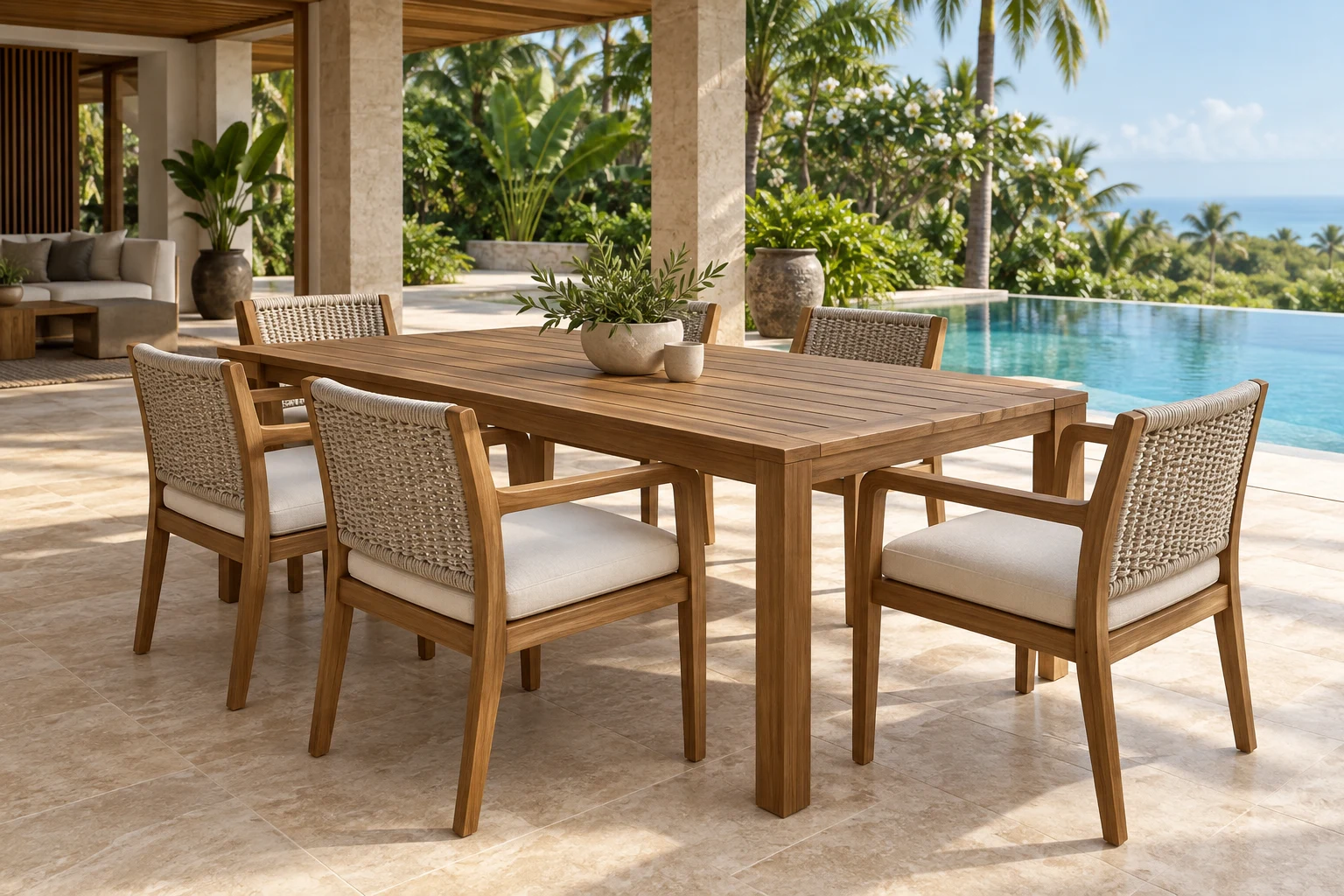
Original furniture design does not require every component to twist, curve, or demand an unfamiliar production method. A collection can develop its own identity through a specific combination of proportions, arm profiles, leg shapes, weave patterns, and material relationships. Start with the atmosphere you want the property to express, then translate it into a few repeatable design decisions. For this article, the proposed Pareena Decor direction combines warm teak, restrained rounded edges, orderly woven surfaces, and ivory upholstery, with forms intended to be explored through practical workshop development. These are new concepts created for the brief without using a competitor’s product image as a template; that is different from claiming that no similar detail exists anywhere in the market. A production review and appropriate originality checks remain separate steps before commercial release. The images illustrate visual intent, while physical samples would establish comfort, stability, assembly, and final materials. Think of the collection as a family: each piece can have its own role while sharing recognizable features with the others. A table does not need to look like a chair, but its edge profile and timber tone can help them belong together. This approach gives custom outdoor furniture a useful balance of identity and consistency, making it easier to expand the range without turning every new item into an unrelated design exercise.
A New Teak Sunbed Concept for Poolside Relaxation
The first concept image explores a poolside arrangement built around two teak sunbeds, light upholstery, and a compact shared table. The design direction uses substantial side rails, softly eased edges, and a restrained profile, keeping the furniture visually connected to the horizontal lines of the pool and terrace. Instead of adding decoration to every surface, the proposal lets the wood grain and the relationship between the rails and supports create interest. A raised backrest suggests the reading position, while the long seat area establishes the relaxed character expected from pool villa furniture. These visible elements are design intentions, not verified ergonomic or structural specifications. Before manufacture, the workshop would need to resolve the adjustment mechanism, stability in every position, finger clearance, cushion attachment, drainage, and the dimensions required by the project. The side table should also be tested for usable reach and stability when placed on the actual terrace surface. For a hotel buyer, the useful next step would be a full-size prototype rather than ordering directly from the rendering. Place that sample where guests would use it and assess the view, movement around it, and practical access for housekeeping. The concept is intended to create a calm, inviting poolside experience through credible proportions and clean workmanship, with the final engineering and approved sample turning the visual idea into a dependable product.
A Coordinated Teak and Woven Lounge Concept
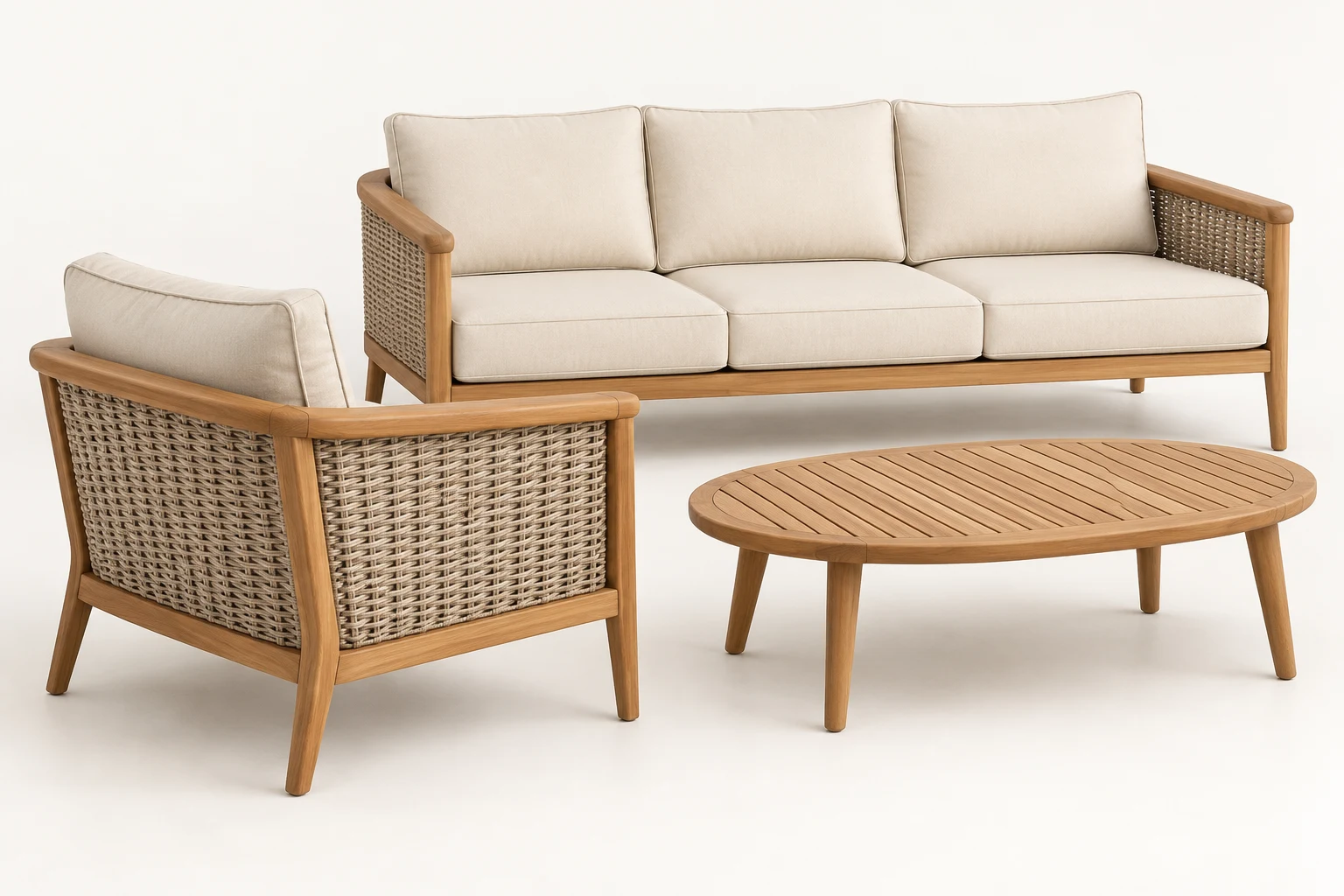
The second concept develops a sofa, lounge chair, and low table as a coordinated group, shown against a white studio background so the design remains easy to inspect. Its main visual feature is the relationship between solid teak framing and neatly ordered woven panels, with rounded arm surfaces and light cushions keeping the overall character relaxed. The chair is presented from an angle that reveals the side and back, because those surfaces matter in an open terrace arrangement where furniture is visible from several directions. The table introduces a softer outline while maintaining a disciplined slatted surface, echoing the collection’s preference for tidy repetition over decorative complexity. As with the sunbed proposal, the rendering does not establish load capacity, weather resistance, comfort, or manufacturing readiness. Production development should confirm the unsupported spans, joints, panel attachment, cushion dimensions, and whether the chosen weaving material suits the intended location. A hotel might explore this direction for a sheltered lounge, while a more exposed setting would require the corresponding verified material specification. Keep the final upholstery choice tied to the property’s maintenance plan instead of selecting it from the image alone. The value of this teak and woven furniture concept lies in the coherent visual language: it offers a starting point for a distinctive collection while leaving room to resolve the practical details carefully with a physical sample.
Plan Furniture for Thailand’s Coastal Projects
For projects in Phuket, Koh Samui, Krabi, and Koh Phangan, the location belongs in the furniture brief from the beginning. Tell the supplier whether the installation faces the sea, sits behind a protected courtyard, or occupies a terrace exposed to wind-driven rain. Those descriptions are more useful than the destination name alone, because conditions can differ considerably within the same property. Ask for written confirmation that the proposed products and finishes suit the specified environment, together with any additional care requirements or warranty limitations. Do not assume that ordinary poolside furniture can be placed in the water; any submerged or partially submerged application needs its own suitability assessment and a product explicitly intended for that use. Delivery planning also deserves early attention, particularly when the route includes a ferry, narrow access roads, steep driveways, or stairs. Record the largest component dimensions and check the entire route from unloading to final placement before production is complete. For modular furniture, agree how parts will be protected, assembled, and inspected on arrival, including who is responsible for reporting transit damage. A coordinated delivery can prevent attractive furniture from becoming an opening-week problem. The strongest coastal project brief connects design, exposure, logistics, and maintenance, giving the supplier enough information to recommend a realistic specification and giving your team a clear basis for reviewing the offer.
Compare Project Costs Beyond the Purchase Price
A lower unit price can be appealing, but it becomes meaningful only when you know what the quotation includes. Two sunbeds may look similar while differing in timber selection, construction, cushion specification, packaging, delivery, and the support available if a component needs replacing. Ask each supplier to quote against the same written brief, then compare the scope line by line instead of using the photograph as the specification. Include the cost of sample development and any design changes, particularly when you are commissioning an original collection rather than purchasing a confirmed standard product. It is also sensible to discuss spare covers, replaceable feet, and other service parts before ordering, because those items can be difficult to match later if the specification changes. For internal budgeting, compare the initial delivered cost with the maintenance and replacement costs your own team expects over a chosen period; those future figures are estimates, not guaranteed outcomes. Avoid accepting a promised lifespan without understanding the conditions and evidence behind it. The right choice may differ between a rarely used private terrace and a busy shared hotel pool. A useful furniture budget makes those differences visible and leaves room for quality where guests and staff will notice it most. The comparison below can help you request clearer proposals without inventing market prices or treating every product as interchangeable.
| Cost area | Ask the supplier to clarify | Why it matters |
|---|---|---|
| Product scope | Exact model, quantity, materials, finish, cushions | Prevents comparison between different specifications |
| Design and sampling | Development fee, revision scope, sample approval | Makes custom work and responsibilities explicit |
| Delivery and assembly | Destination, access, packaging, placement | Avoids unexpected costs at installation |
| Maintenance | Care products, cleaning instructions, service access | Helps operations plan recurring work |
| Replacement support | Covers, components, availability, warranty terms | Supports repair and consistent appearance |
Approve Samples and Organize Maintenance
A clear sample approval process connects the designer’s expectations with the factory’s work and the hotel’s daily responsibilities. Record the agreed dimensions, materials, finish references, upholstery, hardware, and construction details, supported by photographs of the approved sample from several angles. If changes are needed, identify them on the same record so the production team does not have to choose between conflicting messages. For a larger order, define when the buyer will review workmanship during production and what will be checked before dispatch. Include practical issues such as level feet, smooth contact surfaces, consistent weave, correct cushion fit, and the operation of adjustable components, while requesting relevant testing where the project requires it. Maintenance should be planned with similar precision: assign responsibility, keep the supplier’s instructions accessible, and establish how staff will report damage or loose components. Do not turn a small defect into a repeated guest experience by leaving it undocumented. A simple product code on internal records can connect each piece to its care instructions and replacement information without affecting its visible appearance. Ask housekeeping which cleaning tasks fit naturally into existing routines and which require a separate schedule. Good furniture procurement continues after delivery, because the approved product, the installation check, and the maintenance plan all contribute to keeping the outdoor space consistent with the experience you intended to create.
Conclusion
Choosing luxury outdoor furniture for a hotel, resort, or pool villa is an opportunity to shape how guests experience the property, from their first view of the terrace to the moment they settle into a chair. Start with the activities and the setting, then select a clear material specification and develop the details that make the furniture comfortable, practical, and visually connected. Teak, woven panels, and light upholstery can form a warm and inviting direction, but the finished product needs more than an attractive combination of materials. It needs an approved sample, a realistic care plan, an understood delivery scope, and documentation that supports the claims made about it. The new Pareena Decor concepts in this article offer a starting point for that conversation, with a poolside sunbed arrangement and a coordinated lounge group created around restrained forms and orderly craftsmanship. They are concepts to develop and verify, rather than existing products with assumed specifications or promised performance. If you are planning outdoor furniture for a Thailand hospitality project, prepare your layout, quantities, intended exposure, preferred finishes, and target delivery date before requesting a quotation. Contact Pareena Decor through LINE @pareena21 to discuss the brief and the next steps for design and sampling. A thoughtful collection begins with a clear understanding of the space and becomes valuable when every practical detail supports the atmosphere you want guests to enjoy.
What Is the Best Outdoor Furniture for a Pool Villa in Thailand?
The best option is the furniture that matches your villa’s exposure, guest activities, visual identity, and maintenance resources, supported by a specification you can verify. Begin by identifying whether each piece will sit under a roof or remain fully exposed, then explain those conditions to the supplier. Teak may suit a scheme that emphasizes visible wood grain, while an appropriately specified synthetic weave can provide texture and a different visual weight. Neither category should be selected solely because a product photograph looks suitable for a tropical setting. Consider the guest’s experience as well: a sunbed needs to support relaxation, a dining chair needs to work with the table, and a lounge sofa needs a practical relationship between seat depth and back support. Ask to try the actual cushion construction rather than judging softness from the image. For a small pool villa, consistency can be more valuable than a large number of different products, so begin with the essential pieces and leave enough room to move comfortably. Confirm that replacement covers or components can be obtained if that support matters to your operating plan. The best pool villa furniture is therefore a project-specific choice rather than one universally superior material. A clear brief and a representative sample provide a more reliable basis for that choice than broad marketing labels.
Can Teak Outdoor Furniture Stay Outside All Year?
Whether a particular teak product can stay outside throughout the year should be confirmed with its supplier, including the construction, finish, hardware, upholstery, and conditions of use. The timber name alone does not establish the performance of the entire assembly. Ask the manufacturer to describe the intended exposure and explain the maintenance needed at your location, then keep that guidance with the project records. It is also helpful to agree on the appearance you want over time, because an exposed timber surface may look different from the newly finished sample you approved. Do not interpret every visual change in the same way: a colour change, a loose joint, and a damaged component are different observations and may require different responses. Train staff to report what they see instead of assuming that all changes are harmless or that every mark means the furniture has failed. Cushions and accessories may need their own storage and drying arrangements even when the main frame is intended for outdoor use. For periods of nonuse or severe weather, follow the supplier’s instructions for protection and storage rather than improvising a tightly sealed cover around damp furniture. Year-round outdoor use should be an agreed application backed by the specific product’s guidance. It should not become a promise based only on a general reputation for teak durability.
How Do I Choose Between Natural and Synthetic Rattan?
Choose between natural and synthetic rattan by starting with the location and requesting a precise material description for the finished furniture. If you are considering natural rattan, tell the supplier how the area is protected and ask whether that environment is appropriate for the proposed product. If you are considering synthetic rattan, ask which material is used, what evidence supports its intended exposure, and how the woven surface and underlying structure should be maintained. Avoid assuming that every synthetic weave has the same performance or that a natural-looking colour tells you anything about the material itself. From a design perspective, examine the samples in the actual light of the project, because texture and colour can appear different from a screen image. Look closely at the spacing, corners, edges, and back panels to judge the consistency of workmanship. Then ask what repair options exist if a panel is damaged, especially when the furniture will be used across several rooms or villas. A full sample is more useful than a small loose strand when you need to understand comfort and construction. Natural versus synthetic rattan is not simply a question of which looks more luxurious. It is a decision about the intended setting, the particular product, the quality of the workmanship, and the care arrangements your team can realistically provide.
What Should I Send When Requesting a Furniture Quotation?
Send a short project brief that identifies the property location, the furniture types, the quantities, the intended use areas, and your target delivery date. Include a layout or clear dimensions so the supplier can understand the available space, together with photographs showing the actual setting and access route where possible. Describe whether each area is covered, exposed to rain, close to the sea, or subject to other conditions the supplier should consider. Add your preferred timber appearance, weave colour, upholstery direction, and any dimensional constraints, while making clear which decisions are fixed and which remain open to advice. If you are requesting an original design, separate concept development from the final manufacturing quotation so the scope of sampling and revisions is understood. Ask the supplier to state exactly what the price includes, such as cushions, packaging, transport, assembly, and any applicable charges. You should also request the proposed payment schedule, warranty terms, and care documentation without assuming they are the same for every order. Where you have a budget range, sharing it can help the supplier develop an appropriate proposal rather than repeatedly revising an unsuitable specification. A complete furniture enquiry saves time because it gives the factory enough information to respond specifically and gives you a consistent framework for comparing the resulting offers.
Can Custom Furniture Make a Hotel Look More Distinctive?
Custom furniture can help a hotel express a more coherent identity when the design responds to the architecture, the guest experience, and the character the property wants to communicate. The strongest results often come from a small number of well-chosen details, such as a recognizable arm profile, a consistent timber finish, or a carefully developed weave pattern repeated across related products. You do not need every piece to become a visual centrepiece, particularly when the setting already includes a strong landscape or architectural feature. Give the collection a clear role within the larger design, then develop the proportions and construction through samples. Originality should be approached honestly: creating a new design direction without tracing a competitor’s product is a meaningful starting point, but a rendering alone cannot establish global uniqueness or legal protection. Before commercial release, carry out the appropriate design review and resolve the engineering required for the actual product. Custom work also benefits from discipline in the purchasing process, because unresolved dimensions and late material changes can complicate production. Distinctive hotel furniture should remain useful and reproducible, allowing replacements or additions to sit comfortably alongside the first order. When the design, manufacturing, and operations teams work from the same approved specification, a custom collection can give the property a recognizable character while remaining practical to use and maintain.